Child-resistant packaging in the UK: standards, tests and rules
When UK law calls for child-resistant packs, what ISO 8317, EN 862 and EN 14375 cover, how child and adult panel tests work, and what evidence to ask for.
In the UK, child-resistant packaging rules apply mainly to two groups: nicotine vapes and refill containers, which must be child-resistant and tamper-evident under the Tobacco and Related Products Regulations 2016, and consumer chemicals with certain hazard classifications under GB CLP. The standards behind the term are BS EN ISO 8317 for reclosable packs and BS EN 862 for non-reclosable packs, and both rely on tests with panels of young children and adults. For other products, child-resistant packs are a choice rather than a legal duty, but the same standards apply if you claim the feature.
What child-resistant packaging means
Child-resistant packaging is designed to be difficult for young children to open, or to get a harmful amount of the contents out of, within a reasonable time. It is not childproof. Given enough time and persistence, many children could open almost anything. The aim is to slow them down long enough for an adult to notice.
A good child-resistant pack must also work for adults. The standards test whether older adults can open the pack and, for reclosable packs, close it again properly. A cap that is so stiff that adults leave it loose gives no protection at all.
Child resistance is a property of the closure and the container working together. A push-and-turn cap only resists children when it locks correctly onto a neck it was designed and tested with.
When UK law requires child-resistant packaging
Several UK rules call for child-resistant packs. The two most relevant to our customers are summarised below.
| Product | Rule | What it requires |
|---|---|---|
| Nicotine e-cigarettes and refill containers | Tobacco and Related Products Regulations 2016, regulation 36(7) | The product must be child-resistant and tamper-evident, and protected against breakage and leakage |
| Substances and mixtures supplied to the general public with certain hazard classifications | GB CLP (retained Regulation (EC) No 1272/2008), Article 35 and Annex II section 3.1 | A child-resistant fastening meeting EN ISO 8317 (reclosable) or EN 862 (non-reclosable) |
| Hazardous products with certain classifications | GB CLP, Annex II section 3.2 | A tactile warning of danger meeting EN ISO 11683 |
| Products with no legal requirement | None specific | Optional; if you describe the pack as child-resistant, you should be able to show test evidence |
Nicotine vapes
Regulation 36 of the 2016 regulations says an electronic cigarette or refill container must be child-resistant and tamper-evident, and protected against breakage and leakage. The same regulation limits refill containers to 10 ml and nicotine strength to 20 mg/ml. Our guide to vape labelling requirements in the UK covers the label side of the same rules.
Hazardous consumer chemicals
Article 35 of GB CLP covers packaging. Where a substance or mixture meets the criteria in Annex II section 3.1.1, the packaging must have a child-resistant fastening. Those criteria include products supplied to the general public that are classified for acute toxicity in categories 1 to 3, specific target organ toxicity (single or repeated exposure) category 1, skin corrosion category 1, or aspiration hazard (with some exceptions for aerosols and sealed sprays), and mixtures containing methanol at 3% or more or dichloromethane at 1% or more.
The classification of your product, not the packaging, decides whether this applies. Your safety data sheet and classification are the place to start.
Child-resistant packaging standards
Four standards come up most often in UK packaging work. Annex II of GB CLP names EN ISO 8317 for reclosable packages, EN 862 for non-reclosable packages and EN ISO 11683 for tactile warnings.
| Standard | Covers | Typical packs |
|---|---|---|
| BS EN ISO 8317 | Reclosable child-resistant packages: requirements and test methods | Push-and-turn caps on bottles and jars, child-resistant tube caps, some resealable bags |
| BS EN 862 | Non-reclosable child-resistant packaging for non-pharmaceutical products | Single-use sachets, blister-style packs for chemicals |
| BS EN 14375 | Non-reclosable child-resistant packaging for pharmaceutical products | Blister packs for pharmacy products |
| EN ISO 11683 | Tactile warnings of danger | A raised triangle on containers of hazardous products |
ISO 8317 is the one most brands mean when they say “child-resistant cap”. It tests the pack as a whole, so a test report should name the exact closure and container it covers.
How child-resistant packaging testing works
The standards use two kinds of test panel, and the pack has to pass both.
- Child panel. Groups of young children are given the pack and asked to open it, first without help and then after a simple demonstration. A pass needs a high share of the panel to fail to open it in the time allowed.
- Adult panel. Older adults are asked to open the pack and, for a reclosable pack, close it again properly within a set time, using only the instructions on the pack. A pass needs a high share to succeed.
The exact panel sizes, ages, times and pass levels are set in each standard, so read the current edition or ask the test house. Under GB CLP, evidence that a child-resistant fastening conforms can only come from laboratories that meet EN ISO/IEC 17025. Annex II also says testing is not needed where it is obvious that the packaging is safe enough for children because they cannot get at the contents without a tool.
What to ask your supplier
- Which standard and edition was the item tested to?
- Which exact closure and container combination does the report cover, including size and neck finish?
- Which laboratory carried out the test?
- Does the result depend on a liner, an inner seal or a specific torque when the cap is applied?
Keep the answers on file with your product records. If any part of the pack changes, check that the evidence still applies.
Common types of child-resistant closure
- Push-and-turn caps: the cap only turns when pressed down. The most common type on bottles and jars.
- Squeeze-and-turn caps: the sides of the cap are squeezed to release it.
- Child-resistant tube caps: used on tubes and cartridge containers, often with a tamper-evident band.
- Child-resistant zip bags: special zips that need two hands or a specific action to open.
- Non-reclosable packs: blisters and sachets that need tearing or pushing through a tough layer.
The right type depends on the product form, how often the pack is opened and who uses it. Frequent opening favours a cap that is easy for adults to reclose correctly.
Child-resistant and tamper-evident are not the same
A tamper-evident feature shows that a pack has been opened; it does not stop anyone opening it. The 2016 regulations describe a product as tamper-evident if it has one or more indicators or barriers to entry that give visible evidence, if breached or missing, that the product or its packaging has been opened. Break-off bands, inner seals and seal labels all do this job.
Nicotine vapes need both features. For other products, many brands choose both, because a child-resistant cap protects the household and a tamper-evident band protects the buyer’s trust.
Our child-resistant packaging options
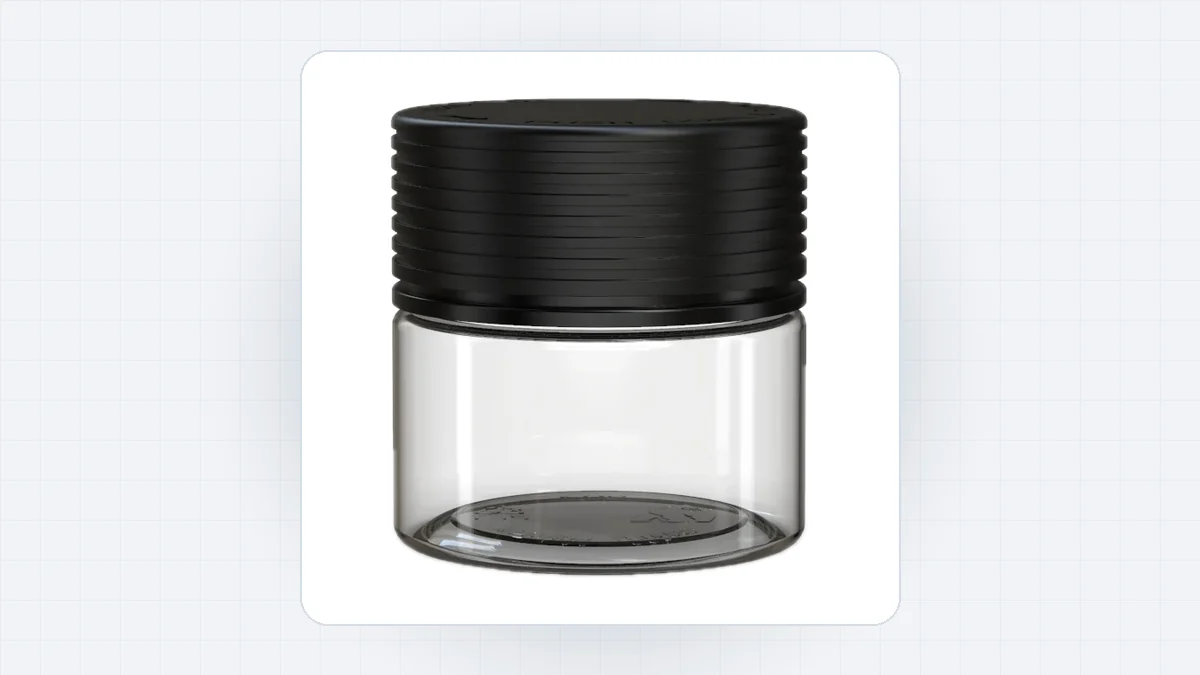
Our Chubby Gorilla range includes many items with a child-resistant cap and a tamper-evident band. Examples include the Spiral and Aviator containers, the Spiral and Aviator child-resistant bottles, the Spiral child-resistant tubes and Aviator tapered tubes, and the 510 cartridge containers. The child-resistant pouch containers have a patented child-resistant upper closure. Some items are not child-resistant, for example the Spiral shot bottles, which have an easy-open friction-fit cap, so always check the product page.
Browse child-resistant jars and containers, bottles and droppers and the wider bottles, containers and tubes range. If your product needs a specific standard, tell us which one and we will tell you what information is available for the item you are considering.
Before you choose a pack
- Confirm whether a legal requirement applies to your product and which standard it names.
- Pick a closure type that suits how your customers use the product.
- Get the test information for the exact closure and container combination.
- Check that your labels, including any warnings and opening instructions, fit the pack.
- Check the current rules with the relevant regulator or a legal adviser for your product.
When you are ready, send us your product, volumes and the standard you need through the quote form.
Frequently asked questions
Is child-resistant packaging a legal requirement in the UK?
For some products, yes. Nicotine e-cigarettes and refill containers must be child-resistant and tamper-evident, and GB CLP requires child-resistant fastenings for certain hazardous products sold to the public. For other products it is a choice.
What is ISO 8317?
EN ISO 8317 is the standard for reclosable child-resistant packages. It sets requirements and test methods using panels of young children, who should not be able to open the pack, and older adults, who should be able to open and close it.
What is the difference between EN 862 and EN 14375?
Both cover non-reclosable child-resistant packaging. EN 862 is for non-pharmaceutical products, while EN 14375 is for pharmaceutical products.
Can I call my packaging child-resistant without testing?
You should not make the claim without evidence that applies to the exact closure and container you use. Under GB CLP, conformity evidence must come from a laboratory that meets EN ISO/IEC 17025, unless the pack obviously cannot be opened without a tool.
Are Chubby Gorilla containers child-resistant?
Many Chubby Gorilla items we supply have a child-resistant cap and a tamper-evident band, but not all. The Spiral shot bottles, for example, have an easy-open cap. Check each product page for the closure it has.